Comparison of Fried Puffing and Microwave Puffing Methods
As a common raw material for soy products, soybean skin is mainly fried and puffed using traditional methods on...
About Production Shipment
For conventional customized equipment, we will complete the production in 7-15 days, the equipment could be shipped after your confirmation.
If available, it can be delivered directly.
Service commitment
After the arrival of the equipment, we will assign professional after-sales personnel to go to site for installation, guidance, commissioning, training, etc.
For those equipment cannot be installed on site, we will provide one-to-one video guidance for installation.
After sales service commitment
Within the agreed warranty period, all components of the equipment will be provided free of charge. Provide lifelong technical maintenance and repair services.
Tel:+86 53188965205
As a common raw material for soy products, soybean skin is mainly fried and puffed using traditional methods on the market, but microwave can also achieve a drying and puffing effect. Both processes can achieve the effect of dehydration and shaping of soybean skin, loosening and puffing, ultimately forming a crispy taste. However, the processing principles relied on are different, and there are significant differences in the characteristics of the finished product, nutritional content, production process, and applicable scenarios.
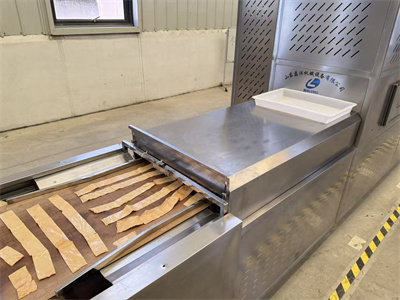
From the perspective of processing principles, the forming logic of the two processes is completely different. The traditional frying process belongs to high-temperature heat conduction processing, which immerses the soybean skin into high-temperature edible oil and relies on the high temperature of the oil to quickly remove the moisture of the material, causing the internal tissue of the soybean skin to rapidly expand and the pores to open, thus forming a crispy texture. It is a classic and mature process for puffing soybean products.
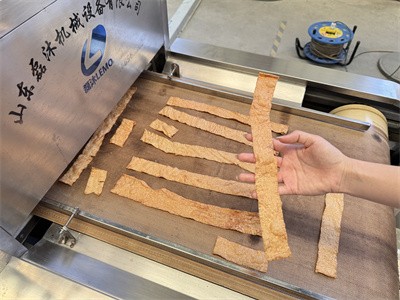
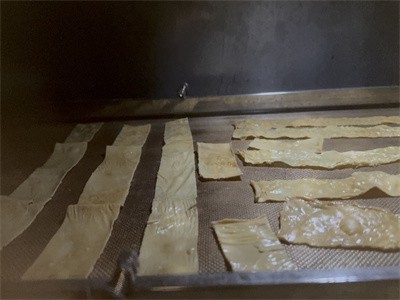
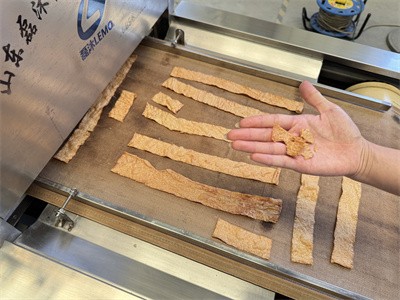
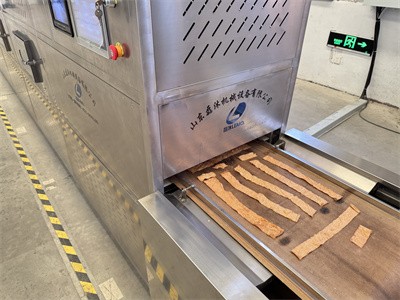
Microwave drying puffing belongs to physical processing, which relies on high-frequency electromagnetic waves to generate heat through rapid vibration of water molecules inside the soybean skin, achieving synchronous dehydration inside and outside. The internal water vapor expands uniformly and spreads the tissue structure, completing puffing and shaping without the involvement of oil.
In terms of finished product taste and appearance, both techniques have their own styles. Deep fried soybean skin is fully soaked in oil, with a high degree of fluffiness in its tissue structure. It has a strong crispy texture and a rich aroma, with a typical fried burnt aroma. The flavor is thick and rich, making it the most well-known soybean skin texture among the public. However, due to uneven oil temperature, some products are prone to excessive oil absorption, greasy taste, and localized burning.
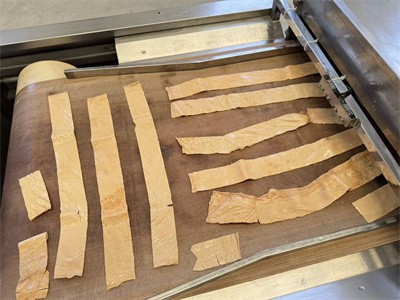
Microwave puffed tofu skin has a refreshing and crispy taste, with even and regular pores. The tofu skin has high integrity, clean and uniform color, and no greasy feeling. It retains the original flavor of the tofu skin and has a light taste. However, the rich flavor unique to deep frying will be relatively weakened.
Overall, there is no superiority or inferiority between the two processing techniques. Deep fried tofu skin excels in its rich flavor and classic taste, making it suitable for the traditional snack market; Microwave puffing of soybean skin focuses on low-fat health, stable appearance, and clean production, which is in line with the current trend of healthy and light food consumption. Enterprises can flexibly choose processing methods based on product positioning and audience needs.





 QQ
QQ