Precautions for Microwave Sterilization of Prepackaged Foods
Microwave sterilization, with its advantages of strong penetration, rapid heating, and physical sterilization, is wi...
About Production Shipment
For conventional customized equipment, we will complete the production in 7-15 days, the equipment could be shipped after your confirmation.
If available, it can be delivered directly.
Service commitment
After the arrival of the equipment, we will assign professional after-sales personnel to go to site for installation, guidance, commissioning, training, etc.
For those equipment cannot be installed on site, we will provide one-to-one video guidance for installation.
After sales service commitment
Within the agreed warranty period, all components of the equipment will be provided free of charge. Provide lifelong technical maintenance and repair services.
Tel:+86 53188965205
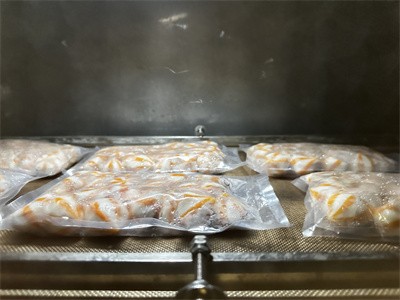
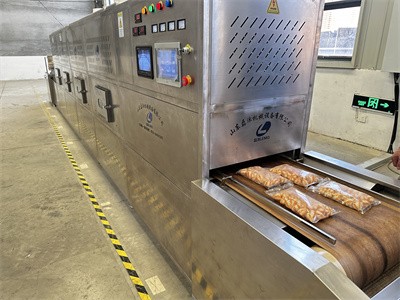
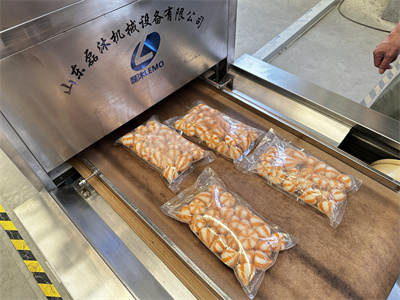
Microwave sterilization, with its advantages of strong penetration, rapid heating, and physical sterilization, is widely used in the processing of various pre packaged foods. It can effectively kill bacteria, molds, and insect eggs, while preserving the flavor and nutrition of the food as much as possible. However, there is a significant difference in sterilization processes between pre packaged and bulk foods. Improper operation can lead to packaging damage, incomplete sterilization, and food spoilage. Therefore, when using microwaves for sterilization operations, it is important to focus on the following points.
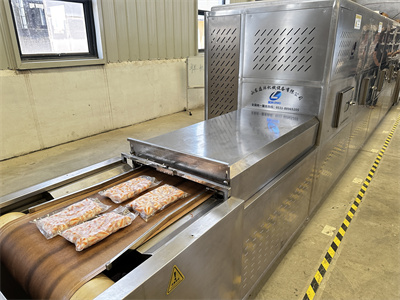
The primary core is to strictly screen compliant packaging materials, which is the foundation of safe sterilization. Microwaves cannot penetrate metal materials. It is strictly prohibited to use aluminum foil bags, packaging bags with metal borders, or metal printing layers. Such packaging will reflect microwaves, generate electric sparks, not only damage industrial equipment, but also pose a fire safety hazard. Priority should be given to using food grade packaging materials such as PET, PE, PP, and composite transparent films that have good microwave penetration and high temperature resistance in production. These materials do not absorb microwaves, do not generate heat, and can avoid packaging deformation, harmful substances precipitation, and prevent secondary contamination of food.
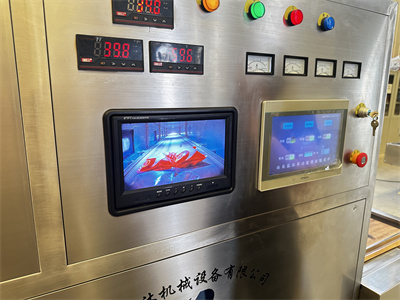
Secondly, it is necessary to control the packaging sealing and pressure bearing process. Most pre packaged foods are in a completely sealed state, and when microwave heated, the moisture inside the ingredients quickly vaporizes, causing a sharp increase in air pressure inside the packaging. If the seal is too tight and there is no pressure relief space, it is prone to problems such as bag swelling, bursting, and seal cracking, resulting in product scrap.
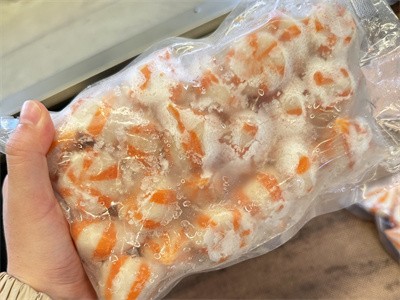
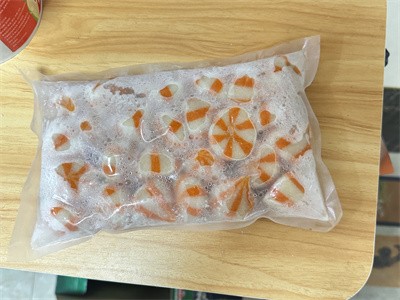
Furthermore, it is necessary to flexibly adjust the sterilization parameters. The differences in thickness, density, and shape of food can affect the microwave effect, so when packaging food, it is necessary to control the product thickness as evenly as possible. In production, it is necessary to customize the power and conveying speed according to the characteristics of the ingredients, and arrange them in a regular manner to avoid stacking and squeezing, so that microwaves can penetrate evenly.




 QQ
QQ