Lithium batteries are the result of the development of science and technology. With people's higher requirements on battery storage capacity, environmental protection and other aspects, lithium batteries have shown the voice of modern consumers in many aspects. The range of applications of lithium batteries is very wide, and mobile phones, vehicles and other fields have shown the superiority of lithium batteries, which also makes more and more products with lithium batteries or lithium batteries enter the EU market.
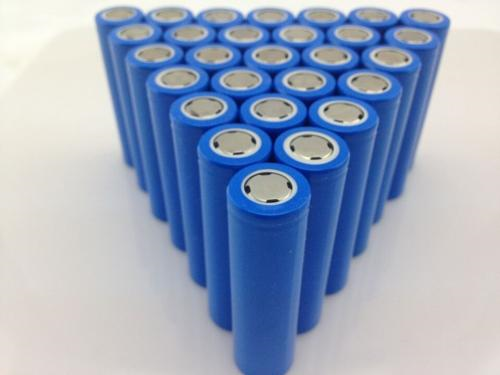
For the CE certification of lithium batteries, the European Union cited the International Electrotechnical Commission IEC standard. On February 7, 2017, the International Electrotechnical Commission IEC upgraded and revised the current IEC 62133: 2012. The new version of IEC 62133 is divided into IEC 62133-1: 2017 and IEC 62133-2:2017, IEC 62133-2:2017 are standards for lithium batteries.
The standard for CE certification of lithium batteries is EN 62133-2:2017, and some of the test requirements are as follows:
1. Continuous charging test, which clearly indicates that the 7-day charging test is conducted under the standard charging voltage;
2. Case stress test, indicating that this test is only applicable to the case where the battery uses a molded case;
3. The external short circuit test of the battery core, the ambient temperature is changed from the original 20+/-5 degrees to 55+/- 5 degrees, which is more strict;
4. The external short-circuit test of the battery pack changed the ambient temperature from 55+/-5 degrees to 20+/-5 degrees, which became loose, and introduced the certification of key components and the concept of important functional safety assessment;
5. Drop test, add optional drop surface as metal;
6. Thermal abuse test, the maintenance time to reach the highest temperature, a uniform requirement of 30 minutes;
7. Squeeze test, the force range is required to be more precise, delete the deformation as the test termination condition;
8. The battery pack overcharge test is changed to a single-cell battery pack with 1.4 times the charging voltage (but ≤6V), and multiple cells in series with 1.2 times the charging voltage, which is looser than the previous version;
9. Forced discharge test, which increases the requirements of discharge voltage and reference test time according to discharge curve;
10. Mechanical testing, adding vibration and acceleration shocks, canceled the previous requirements referring to the transport standards IEC 62281 and UN 38.3;
11. Compulsory internal short test, no requirement for button batteries;
12. Other test requirements.
For lithium battery CE certification, you can call ZRLK to consult related businesses, and there are professional engineers here to answer your questions online. ZRLK focuses on providing comprehensive technical services such as testing, certification, appraisal, technical consultation, and solutions for the majority of corporate customers. Enterprises with related testing and certification requirements can contact us directly.