Battery transportation and circulation in the market of each country must be tested and certified according to the corresponding certification standards. The general battery certification is divided into the following types according to different national standards:
China: CQC certification
EU: CE certification, battery directive, EMC certification
United States: UL certification
Japan: PSE certification (METI filing)
South Korea: KC certification
Taiwan: BSMI certification
Safety requirements in transit UN38.3+MSDS
China: CQC certification
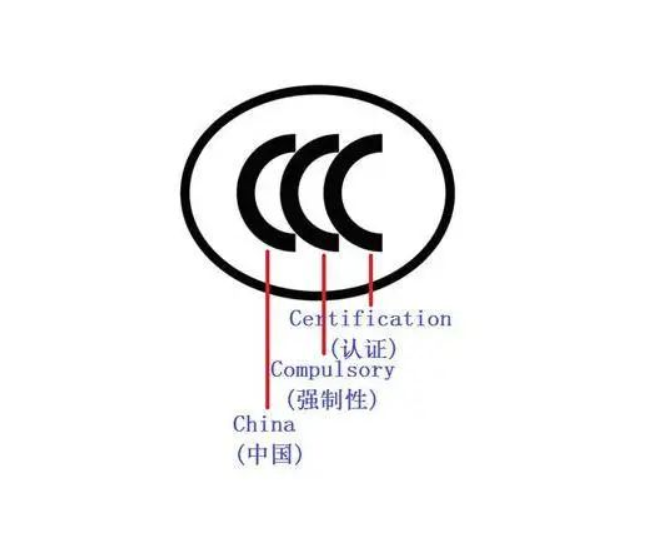
CCC has not yet carried out mandatory certification of battery cells, but products with batteries will require the relevant test content of the relevant CQC non-mandatory certification of batteries. Although CQC certification is a voluntary product certification, companies applying for CQC certification have greatly improved the quality of their products:
1. The product has passed CQC certification, indicating that the company's products fully meet or exceed the relevant standards of the country or industry, which greatly improves the company's image and product quality;
2. Many types of CQC certified products are components. If the company's products pass the CQC certification, then the customer's complete machine product does not need to be repeated for random testing. On the one hand, the test cost can be saved, on the other hand, the test risk can be reduced.
3. With the improvement of people's living standards, consumers have higher and higher requirements on product quality and safety, and certified products are more likely to be favored by consumers.
Test standard: GB31241 cycle is expected to take 3-4 weeks
EU: CE certification, battery directive, EMC certification
1. The CE mark is a road safety qualified mark rather than a quality qualified mark. It is the "main requirement" that forms the core of the European Directive. Battery CE certification: EN62133 standard
2. The Battery Directive 2006/66/EC is a battery regulation established by the European Union, which aims to reduce the production of harmful batteries and accumulators, improve the recovery, disposal and recycling rate of old batteries and accumulators, and increase the collection and recycling of batteries and accumulators The amount of waste.
3. The EMC directive is 2014/30/EU.
Test standards: EN62133, 2006/66/EC, 2014/30/EU cycle is expected to take 1-2 weeks.
United States: UL certification
Before entering the US market, batteries often need to enter the UL certification. Although UL certification is voluntary, the US Customs releases the goods with the "ul" mark, but without this mark, complex inspection procedures are required. And when a safety accident occurs, the CPSC will also use the UL standard as the basis for judgment. Therefore, in the United States, in order to avoid trouble, many sellers refuse to sell products without the "UL" mark. As the components of electrical products enter the United States, batteries require UL certification.
UL1642 is the first edition of the American Safety Testing Laboratory Company (also known as UL Company, Underwriters Laboratories Inc.) launched in October 1985, which is a specification standard for the safety of lithium batteries. It is the most widely certified evaluation of lithium batteries in the world. The authoritative standard for battery safety and reliability. Mainly for cells.
UL2054 is mainly aimed at lithium battery packs or battery packs. It is suitable for primary (non-rechargeable) and secondary (rechargeable) batteries used as power sources in products. These batteries may consist of a single electrochemical cell or two or more lithium-ion batteries that convert chemical energy into electrical energy through chemical reactions in parallel or in series.
Test standard: UL1642, UL2054 test cycle is expected to take 4-6 weeks.
Japan: PSE certification
Lithium ion batteries within a specific range have been included in the product catalog of the Electrical Appliance and Material Safety Law by the Japanese government. Lithium ion batteries currently exported to Japan must comply with the requirements of the laws and regulations regarding supplier declaration of conformity The round PSE logo must be pasted (see picture below).
All lithium-ion battery products that comply with the scope specified in the Japanese Electrical Appliance Material Safety Law must pass the PSE round test requirements. The specific scope of coverage is: only those batteries composed of secondary batteries with an energy density of not less than 400Wh/L, but excluding secondary lithium-ion batteries for automobiles, excluding those used in electric bicycles, medical equipment, and industrial equipment Secondary lithium-ion batteries, excluding batteries that are fixed in the equipment by welding or similar methods (can not be easily displaced), or those with other special structures
Test standard: JISC8712, JISC8714 cycle is expected to be 4 weeks
Mention that PSE certification will involve METI filing here
Buyers in Japan must register with the Ministry of Economy, Trade and Industry (ETI) within one month after purchasing the product. They must have a Japanese trading company registered with the Japanese government to apply for registration with METI.
What are the METI filing procedures?
1. Provide products for PSE certification
2. Obtain the certificate and report and submit it to Japan Economic and Trade Bureau
3. Obtain the METI record letter
The cycle is expected to take 1-2 weeks
South Korea: KC certification
"KC" certification is a national unified certification mark implemented by the Korean National Standards Council. Lithium batteries are included in the KC certification catalog as a mandatory certification product. At present, the testing of portable secondary lithium battery packs and lithium batteries must be authorized by South Korea. It can not be re-certified by the CB report of IEC 62133. After the product passes the evaluation, it will be issued a Confirmation Letter of Declaration (Validation Letter of Declaration) with a validity period of 5 years, during which no factory inspection is required.
Recently, the South Korean battery implementation standard has transitioned from the original KC62133:2018 to KC62133:2019. The specific changes and precautions are as follows:
Standard version changes. The new version of the standard is: KC62133:2019 (In addition, although the KC62133-2:2019 version of the standard has already been drafted, it will be postponed, and the 2017 version of the CB certificate will not be accepted when applying for the KC transfer certificate accordingly).
KC62133: The 2019 version of the standard will be officially implemented from September 6, 2019. According to legal requirements, the Korean certification bodies (KTL, KTC, KTR, etc.) can only issue KC 62133:2019 version of KC certificate at that time, and will no longer accept the 2015 and 2018 version of the certificate application.
Test standard: KC62133: The 2019 cycle is expected to take 3 weeks (usually CB is used for certificate transfer, the cycle is 3 weeks)
Taiwan: BSMI certification
According to the announcement of the Ministry of Economic Affairs of Taiwan, from July 1, 2005, products entering the Taiwan region shall be subject to two aspects of electromagnetic compatibility and safety regulations. China’s Taiwan BSMI certification is mandatory. However, BSMI currently does not have factory inspections, but it must act in accordance with the regulations of the Bureau of Standards. Therefore, the BSMI certification model is: product inspection + registration supervision.
1. Verify that the login certificate and type approval certificate are both valid for three years. The certificate is valid for three years, and it must be extended before the expiration of three years. It can be used for three years after the extension. The evidence collection fee includes the inspection fee and the first year certificate Annual fee. (Every model forensics fee is RMB2,000)
2. An annual fee is required to verify the login certificate. The first year annual fee is generally paid by the partner company when the certification is received. The second and third years will be notified by the BSMI to the holder. The annual fee for each certificate is NTD5,000 per year. -
3. Applying for BSMI requires a local company certificate
Test standard: CNS15364 cycle is expected to take 10-12 weeks
Battery shipping certification
To some extent, batteries are dangerous goods. There are almost all batteries on various mobile devices, such as Bluetooth speakers, Bluetooth headsets, and mobile power supplies. These products are considered hot products on Amazon. You have chosen these products. Of course, you must also complete the certification of the whole machine when you put it on the product. What are the conditions that these internal batteries need to meet before making these machine certifications?
1.UN38.3: The scope of suitability is almost global, and it is a safety and performance test. As long as it involves lithium batteries in the shipping package, whether it is a small button battery or a battery installed on the device, or The batteries packaged with the equipment need to undergo UN38.3 test and obtain the air/maritime transportation appraisal report (domestic departure) before they can be transported.
2. Battery MSDS: Material Safety Data Sheet
That is, the chemical safety technical specifications can also be translated into chemical safety specifications or chemical safety data specifications. It is used by chemical manufacturers and importers to clarify the physical and chemical characteristics of chemicals (such as PH value, flash point, flammability, reactivity, etc.) and the possible harm to users' health (such as carcinogenic, teratogenic, etc.) Many customers encounter such a problem in a document, and MSDS can be written by the manufacturer according to relevant rules. However, in order to ensure the accuracy and standardization of the report, you can apply to a professional institution for compilation.
3. Air/maritime transportation appraisal report:
Relevant products with batteries originating in China (except Hong Kong), the final air transport identification report must be approved by the CAAC Dangerous Goods Appraisal Agency for review and certification.
Test standard: UN38.3, DGR Dangerous Goods Transportation Document (Orange Book) cycle is expected to take 2-3 weeks